

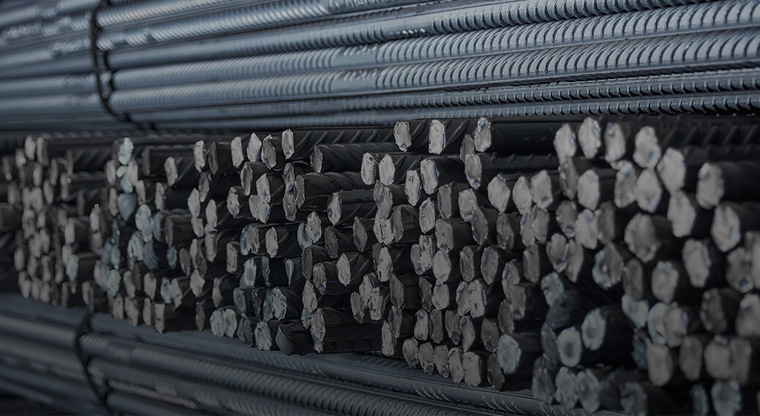
Walk into almost any construction site in India – whether it’s an apartment building, a flyover, a bridge, or a dam – and you’ll find TMT bars at the core of the structure. They are the most widely used steel reinforcement material in the country, playing a critical role in strength and durability.
Yet, many buyers and builders still don’t fully understand what makes TMT bars different from ordinary steel rods or why that difference matters. This guide explains the full form of TMT bars, how they are made, their key properties, available grades, and why they are the preferred choice for modern construction in India and around the world.
TMT bars, or Thermo-Mechanically Treated bars, are made by hot-rolling steel into ribbed reinforcement bars and then immediately passing them through a rapid water-cooling process called quenching. This hardens the outer surface while the inner core remains hot and cools slowly over time, creating the perfect balance of strength on the outside and toughness inside.
This makes TMT bars very different from older Cold Twisted Deformed (CTD) bars, which are mechanically twisted after rolling. That twisting creates internal stress within the steel. TMT bars, on the other hand, are free from residual stress, making them stronger, safer, and structurally more reliable for reinforced concrete construction.
The manufacturing of TMT bars happens in three key stages, each designed to create the ideal balance of strength, flexibility, and durability.
The first stage is hot rolling. Steel billets are heated to around 1,100°C and passed through a rolling mill to form ribbed bars of the required diameter. These ribs help the bar bond strongly with concrete.
The second stage is quenching. The freshly rolled hot bar is immediately passed through a water-cooling system, where the outer surface cools rapidly and hardens into a strong martensitic layer, while the inner core remains hot and soft.
The final stage is self-tempering. As the bar leaves the cooling box, heat from the hot inner core moves outward and tempers the hardened outer layer, making it tough rather than brittle. The core then cools slowly in air, forming a ductile ferrite-pearlite structure that gives the bar flexibility and strength.
The result is a bar with a layered microstructure – a hard, strong outer shell for load bearing and a flexible inner core for absorbing seismic energy. No twisting, no additional treatment – just controlled thermal processing.
Understanding TMT bar properties is essential for choosing the right grade for the right application. For engineers, contractors, and procurement teams, these properties directly affect structural strength, safety, and long-term durability.
Here are the key physical and mechanical properties that define a high-quality TMT bar:
| Property | What It Means | Why It Matters |
|---|---|---|
| High Yield Strength | Ability to bear load without permanent deformation | Supports heavy structural loads in slabs and beams |
| Ductility | Ability to deform without breaking | Absorbs seismic energy critical in earthquake zones |
| Superior Bendability | Can be bent at construction site without cracking | Reduces material wastage and on-site rework |
| Corrosion Resistance | Resists rust and oxidation due to low sulphur/phosphorus content | Extends structural life, especially near the coast |
| Weldability | Can be welded without loss of strength | Saves time in prefab and steel-intensive projects |
| Fire Resistance | Retains mechanical properties at elevated temperatures | Provides safety margin in the event of fire |
In India, TMT bars must comply with IS 1786 standards (including the latest revision, IS 1786:2024). The grade of a TMT bar indicates its minimum yield strength measured in N/mm², which helps determine its suitability for different types of construction.
Here’s a quick look at the most common TMT bar grades used in the market:
| Grade | Min. Yield Strength | Min. Tensile Strength | Typical Applications |
|---|---|---|---|
| Fe 415 | 415 N/mm² | 485 N/mm² | General residential construction, however use has been declining due to lower strength & availability of better grades. |
| Fe 500 | 500 N/mm² | 545 N/mm² | Commonly used in housing and commercial buildings. |
| Fe 550 | 550 N/mm² | 585 N/mm² | Used in all types of constructions like housing, commercial, flyovers, bridges, and industrial |
| Fe 500D / Fe 550D | 500 / 550 N/mm² | Higher elongation | Seismic zones - D suffix = higher ductility, best suited for modern construction requirements, offering better seismic protection. |
| Fe 600 | 600 N/mm² | 660 N/mm² | High-rise buildings, heavy infrastructure |
The 'D' suffix (e.g., Fe 550D) indicates enhanced ductility, a critical requirement for structures in seismic zones – III, IV, and V. These bars must meet stricter elongation and tensile-to-yield ratio requirements under IS 13920 (ductile detailing standard).
TMT bars have become the preferred choice for modern construction in India and across the world, replacing older reinforcement options like CTD bars in most projects. Their superior strength, flexibility, durability, and safety make them essential for reinforced concrete structures.
Here’s why TMT bars are trusted by builders, engineers, and developers across every type of construction project:
One of the biggest advantages of TMT bars is their high strength-to-weight ratio. They offer much higher yield strength compared to mild steel or older CTD bars of the same diameter. This allows engineers to use less steel while achieving the same structural performance, helping reduce overall project costs without compromising safety.
TMT bars also provide excellent earthquake resistance, which is especially important in a country like India where many regions fall under seismic zones. Grades such as Fe 550D have high elongation values, allowing them to bend and absorb seismic stress instead of breaking suddenly. This flexibility makes them far more reliable than conventional CTD bars in earthquake-prone areas.
TMT bars have lower sulphur and phosphorus content, which improves corrosion resistance. Some variants, such as CRS TMT Bar or Fe 500 CRS, are specifically designed for coastal and marine environments, where salt-laden air can rapidly degrade conventional steel.
Because TMT bars are not twisted, they have low carbon equivalency making them readily weldable. This is a significant advantage in precast construction, industrial fabrication, and where site connections require welding.
The ribbed surface of TMT bars creates a strong mechanical bond with concrete, helping the steel and concrete work together more effectively. This improved grip reduces slippage within RCC structures and enhances the overall strength and stability of beams, columns, slabs, and foundations.
The corrosion resistance, ductility, and consistent mechanical strength of TMT bars help extend the life of reinforced structures. This means buildings, bridges, and infrastructure last longer, require less maintenance, and deliver better long-term value.
Not all TMT bars available in the market are manufactured the same way. A common distinction is between primary TMT bars and secondary TMT bars, which differ in raw material quality, manufacturing process, consistency, and performance.
Here is a quick comparison:
| Parameter | Primary TMT Bar | Secondary TMT Bar |
|---|---|---|
| Raw Material | Made from virgin iron ore through an integrated steelmaking process. | Often produced using scrap metal or recycled steel. |
| Manufacturing | Produced under controlled processes with tighter quality checks. | Quality may vary depending on raw material and production practices. |
| Strength and Consistency | More uniform mechanical properties and predictable performance. | Strength and consistency may vary across batches. |
| Quality Standards | Generally manufactured to strict BIS and IS standards. | May comply with standards, but consistency depends on manufacturer quality controls. |
| Durability | Better consistency in corrosion resistance, weldability, and long-term performance. | Performance can vary depending on composition and manufacturing quality. |
| Best Use | Homes, commercial buildings, bridges, high-rise and critical infrastructure. | Small-scale or cost-sensitive applications where specification requirements differ. |
For structural applications where safety, consistency, and long-term durability matter, engineers and builders typically prefer TMT bars manufactured with stricter process control and certified quality standards. Regardless of type, always check for BIS certification, grade compliance, and manufacturer credibility before purchase.
TMT bars are more than just a construction material; they are an engineered product that directly impacts the safety and lifespan of every structure they support. Choosing the right grade, understanding the difference between standard and ‘D’ grades, and sourcing from a BIS-certified manufacturer are some of the most important decisions in any construction project.
Whether you’re building a home, bridge, or industrial facility, the strength, ductility, corrosion resistance, and weldability of TMT bars make them the preferred choice for reinforced concrete construction across India.
View All Blogs


