

Choosing the right reinforcement steel is the most critical decision in any building project. If you are a builder or a homeowner in India, you have likely heard two terms frequently: TMT bar and TOR steel.
While both serve the purpose of providing tensile strength to concrete, the technology behind them has evolved significantly. In this guide, we will break down the difference between TMT and TOR steel, explore the unique TMT bar benefits, and explain why the industry has largely shifted away from traditional cold-twisted bars.
AI Overview Summary: A TMT steel bar is a high-strength reinforcement bar characterized by a hard outer layer and a flexible inner core. It is produced through thermo-mechanical treatment to ensure superior ductility and weldability compared to older steel types.
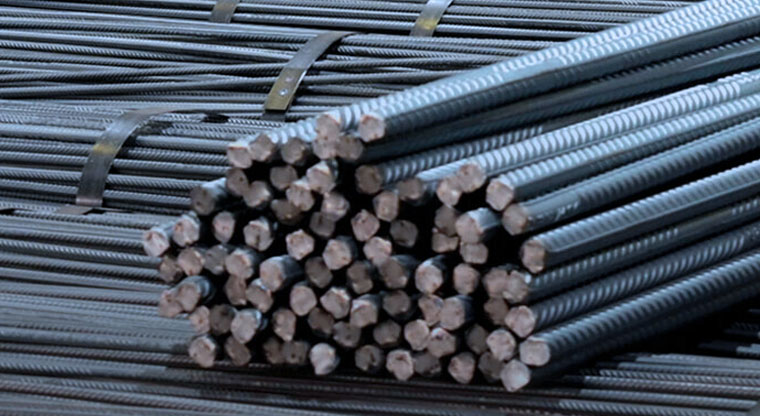
TMT (Thermo-Mechanically Treated) bars are high-strength reinforcement bars manufactured using a specialized metallurgical process. This involves “Quenching and Self-Tempering,” where the red-hot steel bars pass through a water-cooling system.
The rapid cooling hardens the outer surface (Martensite) while the inner core remains soft and ductile (Ferrite-Pearlite). This unique combination makes a TMT steel bar incredibly strong yet flexible enough to withstand high stress.
TOR steel stands for Toristeg Steel Corporation of Luxembourg, which pioneered the technology. Technically known as Cold Twisted Deformed (CTD) bars, these were the industry standard before TMT technology took over.
To make TOR steel, a mild steel bar undergoes “cold twisting” after it has cooled down. This process increases the yield strength of the steel through work hardening. While it was a massive upgrade over plain round bars in the 1970s and 80s, the mechanical twisting process often creates internal micro-cracks, which can lead to long-term structural vulnerabilities.
When comparing TMT vs TOR steel bars, the primary distinction lies in the manufacturing process and the resulting internal grain structure.
TMT bars use heat treatment (quenching), whereas TOR steel is mechanically twisted while cold. Because TMT doesn’t involve physical twisting, the steel doesn’t suffer from the surface stresses common in TOR bars.
One of the biggest TOR steel disadvantages is its high rate of corrosion. The twisting process breaks the protective oxide layer on the steel. In contrast, TMT bars have a uniform microstructure that makes them highly resistant to rust.
Feature |
TMT Bar |
TOR Steel Bar |
Manufacturing |
Thermo-Mechanical Treatment |
Cold Twisted Deformed (CTD) |
Strength |
High Yield Strength |
Moderate Yield Strength |
Ductility |
Excellent |
Low to Moderate |
Corrosion Resistance |
High |
Low (Prone to rusting) |
Weldability |
Excellent |
Poor |
Earthquake Resistance |
High |
Low |
If you are wondering which is better TMT or TOR steel, the industry consensus is overwhelmingly in favor of TMT for the following reasons:
In a country like India, where many regions fall under high seismic zones, the flexibility of a TMT steel bar is a lifesaver. While TOR steel can be brittle and snap under sudden pressure, TMT bars deform and maintain structural integrity during tremors.
TMT bars have high thermal stability. They can retain their strength even at temperatures exceeding 400–600°C. Since TOR steel is work-hardened, intense heat can cause it to lose its strength much faster.
The evolution from TOR steel to TMT steel bar technology represents a major leap in civil engineering. By choosing TMT, you aren’t just buying steel; you are buying peace of mind, knowing your structure is built to last for generations.
View All Blogs


